.svg)
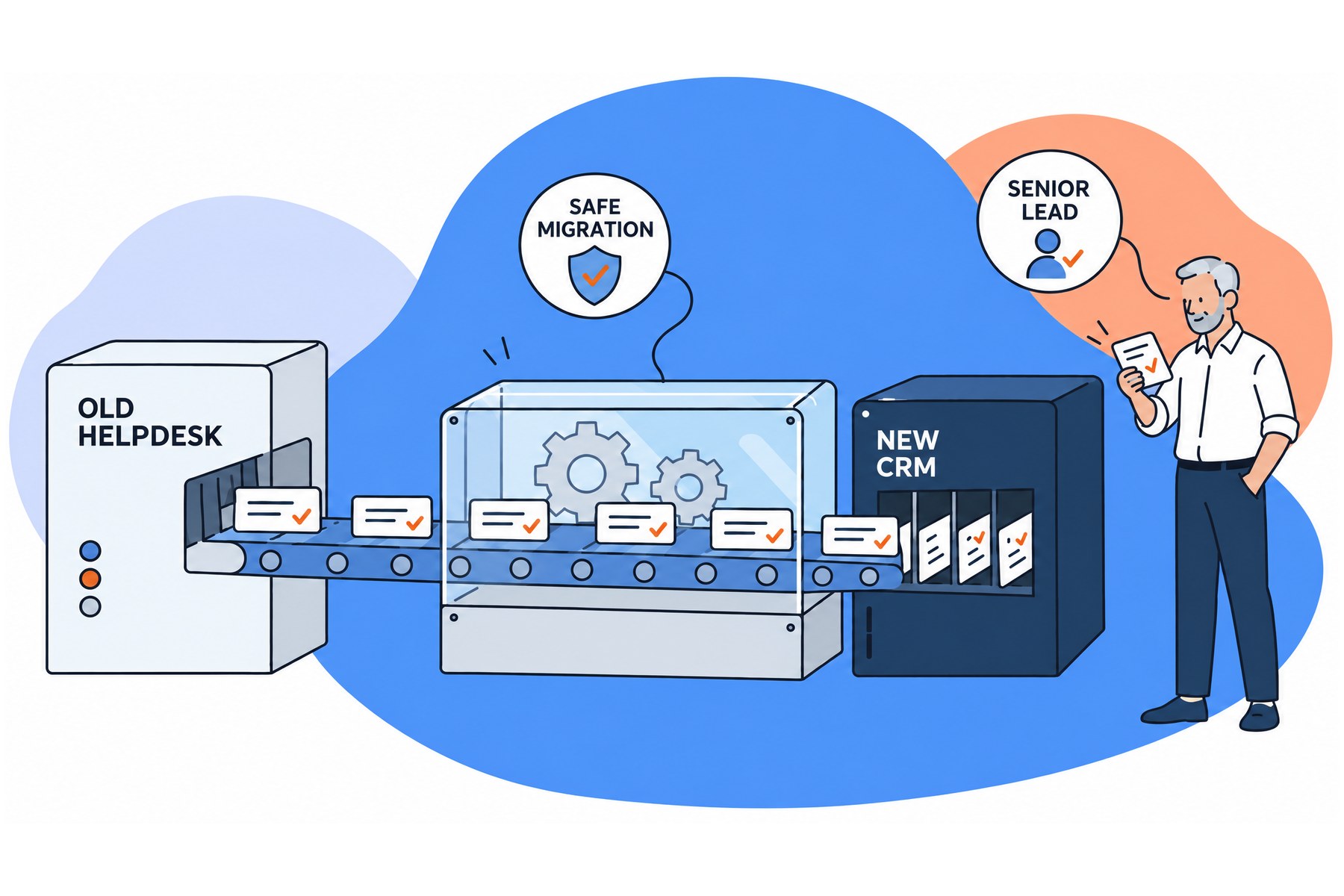
Most "best HubSpot agency" content is written for a sales or marketing buyer: pipeline reporting, lead scoring, campaign attribution. If you're evaluating a partner for end-to-end HubSpot CRM implementation on behalf of a support or operations team, none of that tells you what you actually need to know. What matters is how they handle migrating support workflows into HubSpot CRM without losing ticket data, how deep their integrations really go beyond a marketplace app, and who's still answering your questions three months after go-live.
Here's the direct answer: look for a partner with real migration experience on your specific helpdesk, integration work that goes beyond a one-way data sync, and a team structure where the same senior person who scoped the project is still involved after launch.
Why support and operations teams need a different checklist
A support team's HubSpot project isn't really about HubSpot. It's about what happens to the tools you're already running day to day: your existing helpdesk, your macros and triggers, your SLAs, your agents' muscle memory. A sales-focused agency will happily talk about deal pipelines and forecasting. Ask them about ticket field mapping during a live cutover, and the conversation usually stalls. The right partner for a support team should be able to answer that question immediately, with specifics.
Migrating support workflows into HubSpot CRM: what actually matters
If you're moving off Zendesk, Freshdesk, or a similar platform, migration is the part that actually determines whether the project goes smoothly. It's not just "can they move the data," it's whether they understand what's genuinely at risk: ticket history and timestamps, custom fields that don't map cleanly to HubSpot's model, existing automation rules that need to be rebuilt rather than copied, and keeping the helpdesk usable for agents during the transition itself.
We've done this from both sides. Pineo previously held Zendesk certifications alongside our HubSpot Platinum partnership, so migrating a support team off Zendesk and into HubSpot isn't a first-time exercise for us, it's familiar territory. One of our clients, User Guest, put it simply after their migration: "Seamless HubSpot migration with no data loss. They built our funnel, automations, and integrations from scratch and still support us when needed."
Integrating Zendesk data into HubSpot CRM: integration depth, not just "does it connect"
There's a real difference between installing a marketplace app that syncs tickets one-way, and building an integration that actually reflects how your support team works: which fields matter, which statuses trigger what, and where a ticket needs to hand off to a deal or a company record instead of sitting in isolation. Ask any agency you're evaluating to walk through a real integration they've built, not just a list of apps they can install. If the answer is vague, that's the answer.
What actually improves customer support response times
A HubSpot agency that understands support operations should be able to speak specifically to response times, not just in the abstract. HubSpot's Service Hub includes ticket routing, SLA tracking, and automation that can shorten first-response time when it's configured around your actual ticket volume and team structure, not left on default settings. The difference between a generic setup and one built around your workflow is usually the difference in whether response-time targets are actually met week to week.
Who's actually doing the work after go-live
This is the question support teams ask least often and regret not asking most. A lot of agencies sell you a senior consultant during the pitch and hand the actual delivery to whoever's available. At Pineo, every project is delivered by senior consultants directly, not handed off to juniors partway through. One of our clients, Frive, described exactly this kind of ongoing support: "Will stepped in during our onboarding, quickly understood our needs, and got things on track. He became a go-to for our CS team and helped us hit key priorities fast."
We've supported teams at this scale before. On apetito's 160-user HubSpot account, our fractional consultant onboarded and trained users directly across three business divisions, not through a rotating cast of contacts.
A short checklist before you sign
Ask for the name of the person who will actually run your migration, not just the person who sold you the project. Ask specifically what happens to your ticket history and custom fields during cutover. Ask who supports your team in week one after launch, and whether that's the same person from the sales conversation. Ask for a reference from a support or operations contact, not just a marketing or sales stakeholder, since their experience of a project is genuinely different.
If you're further back in the process and still weighing whether to bring in a partner at all versus handling it internally, our guide to deciding between a HubSpot partner and DIY covers that broader decision in more depth.
Speak to us if you're planning a support team migration or integration project. We'll walk through what's actually involved for your setup before you commit to anything.
.svg)
.webp)